Robot World’s Hidden Prize: How Robot Fleets Could Improve AI
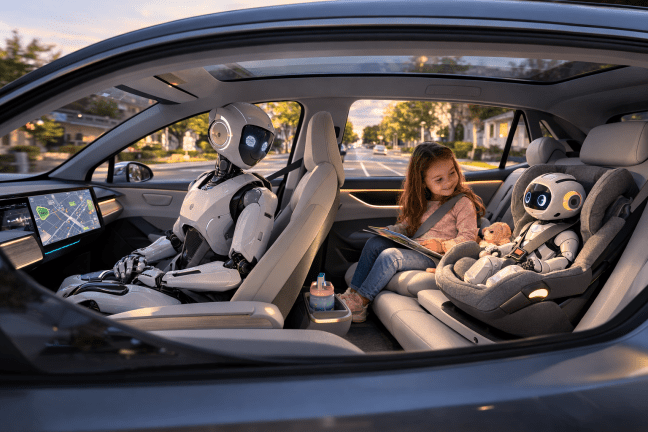
Self-driving car with adult-size robot in front not driving, and child plus child-size robot in back - and an analogue teddy!

The next big bottleneck in AI may not be model size or compute. It may be access to grounded, real-world experience. If millions of embodied robots begin operating in homes, vehicles and care settings, they could generate filtered experience traces that improve LLM-plus systems far beyond what internet text alone can provide. Child-size companion robots may be especially important because they open access to a domain that today’s AI models understand badly: children’s language-in-context and everyday micro-social interaction. But this only works if the architecture is privacy-first: central systems should receive distilled updates, not intimate raw detail from children’s lives, except under tightly governed emergency rules.

Reflections on the closure of the OER Foundation and the implications for OER policies worldwide

The recent announcement of the impending closure of the OER Foundation (based in Otago in New Zealand) has drawn attention again to the sustainability (or not) of major OER initiatives and the longevity of OER policies. Acting on this we decided to do one of our rapid AI-assisted reviews of the current state of the OER domain. The results were challenging. For speed, this review initially started with a series of seven questions put to ChatGPT (version 5.2) - which we have used a lot over the last three years for policy anal

What schools can learn from virtual schools – final presentation at EDEN 2024 Graz

On behalf of the joint authors Paul Bacsich presented the team's report What schools can learn from virtual schools (and online universities) and sought feedback from the research community. He also invited further experts to contribute papers to the Education Sciences journal Special Issue on Virtual Schools for K-12 Education: Lessons Learned and Implications for … Continue reading What schools can learn from virtual schools – final presentation at EDEN 2024 Graz